 Verified*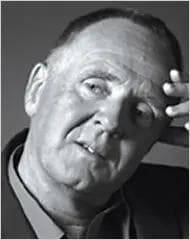
Colin McGinn
Philosopher
Colin McGinn is a British philosopher known for his work in the philosophy of mind, especially his theory of “new mysterianism” regarding consciousness. He has taught at Oxford and Rutgers and has authored over 20 philosophical books. His blog is a masterpiece of philosophical insights — https://www.colinmcginn.net/blog/.
*This summary was verified by Colin McGinn on June 26, 2026.

Key Takeaways
Core Claim
The link between mind and brain is real but forever beyond human understanding due to our cognitive limits.
How It Works
Distinguishes objective difficulty from subjective difficulty; consciousness may be biologically simple yet conceptually inaccessible.
Distinguishing Idea
Rejects supernatural or dualistic solutions, instead holding that the mystery is entirely natural yet permanently opaque.
Illusion of Hardness
Argues that consciousness seems harder to explain than language only because our access to it is limited.
Brass Tacks Focus
Urges study of neurons, axons, and dendrites as the physical substrate, while accepting we may never connect them to experience.
McGinn’s Ultimate Mystery (Mysterianism)
Philosopher Colin McGinn, with insights into mind-body problems, influenced my [RLK’s] thinking about consciousness, and, as such, I am going to present his ways of thinking somewhat differently. Below, unchanged, is how I described McGinn’s early views in my “A Landscape of Consciousness” article (original published version, Kuhn, 2024), not having sent it to him prior to publication. Following this, I reproduce his post-publication response and my subsequent updating of his thinking (which I did send to him prior to publication, making corrections accordingly).
Original
Philosopher Colin McGinn argues that the bond between the mind and the brain is “an ultimate mystery, a mystery that human intelligence will never unravel” (McGinn, 2000). In his classic paper, “Can We Solve the Mind-Body Problem?” McGinn opens his case: “We have been trying for a long time to solve the mind-body problem. It has stubbornly resisted our best efforts. The mystery persists. I think the time has come to admit candidly that we cannot resolve the mystery.” He concludes his case thus: “A deep fact about our own nature as a form of embodied consciousness is thus necessarily hidden from us” (McGinn, 1989).
For his fondness of the word “mystery” in the context of consciousness, McGinn was awarded the appellation “mysterian”—not a label of his choosing [or liking]—and he became an unvolunteered leader of the “New Mysterians,” an ad hoc, though serious group of mostly philosophers and some scientists who have come to believe that consciousness may never be explained completely[1] (“New mysterianism,” 2023). They are distinguished from the “old mysterians” who believed that consciousness is supernatural (from God or the Cosmic Order). The New Mysterians are not dualists or idealists: just because human intellect can never understand consciousness does not mean there is anything supernatural about it. The mind-body problem is simply “the perimeter of our conceptual anatomy making itself felt.” McGinn describes his position as “transcendental naturalism.” (Note: Owen Flanagan first applied the term “mysterians” to those who argued that the problem of consciousness would be impossible to solve, a pessimistic position he rejected [Flanagan, 1991]).
McGinn stresses that consciousness in our universe is contingent, not necessary, so it could have been that while the physical laws obtained, no consciousness ever evolved. “Not every world has consciousness in it, so our world might have been a world in which there was no consciousness.” This is why, McGinn says, “I'm opposed to the idealist view, or the panpsychist view,” that “the physical world itself is somehow inherently spiritual.” He says it is “incontestable that consciousness arises solely from the material world” (McGinn, 2007a).
What are possible deep mechanisms? “[Some] have to bring God in to explain how the mind comes into existence,” a view that McGinn finds unacceptable. “You might hope you can jettison God from the picture so you have a more scientific version of dualism.”
McGinn reveals a wild speculation that he once entertained, a bizarre idea that gives insight into how profound the explanatory problem is. “I once played with the idea that there were two universes, which existed through all eternity,” McGinn muses. “There's a material universe and there's a conscious universe; they were coarsely isolated, but at some point in universal history there was a kind of causal breakthrough between the two.” With this mechanism, consciousness occurs in this “conjoined double universe” because it had existed in the conscious universe for all eternity. “That's a very far out theory,” McGinn smiles, “nobody's ever maintained that theory … not even me. I brought it forward to explain what dualism would have to be like in order to even be coherent” (McGinn, 2007b).
McGinn’s response
Colin: That is certainly a very extensive summation! To me, it is interesting to see how many intelligent errors the topic of consciousness generates. The bit on me is fine. If you don’t know my blog, there is quite a bit of new material there (colinmcginn.net)….
Robert: …. I’m at least glad you think it’s “intelligent”—
Colin: I didn’t mean errors by you, but by all the people you discuss! You report their views very accurately. On my views, you stick to my mystery mongering, which I think is pretty banal on my part; I only get interesting when I start explaining why the mystery exists and why it solves [resolves???] the philosophical mind-body problem (this is the bit that everyone ignores).
RLK: OK, Colin; ignored no longer.
Update
McGinn develops his views by asking, “Is the Problem of Consciousness Hard?”, cleverly drawing attention to what “hard” may actually mean in the context of consciousness (beyond its almost cliché usage when adjectivally modifying consciousness). He makes the surprising claim, “it isn’t really that hard” (McGinn, 2025a).
To explain, McGinn begins with an axiom: “The more complex or intricate an object is, the more objectively hard to comprehend it is.” He then puts it into an evolutionary context: “the simpler something is, the easier it is for it to evolve; the more complex, the harder.” This is why, he says, simple organisms came first. “Bacteria are relatively easy to evolve; baboons, a good deal harder.”
So if “complicated things pose harder problems than simple things,” McGinn asks, “How complicated is consciousness?”
Using sentience (pain, vision, etc.) as a surrogate for a kind of proto-consciousness, he says, “it appeared relatively early on planet Earth (we are speaking here of sentience—pain, vision, etc.); it did not require a super-complex brain, such as a mammalian brain.”
Thus, to McGinn, “From an engineering point of view, consciousness is not that difficult a problem—not that hard to construct.” He compares language, which, he says, “looks a lot more complicated than pain or seeing red; it needs a more complex brain.” This means, he argues, “language poses a harder problem than sentience in this objective sense.” As McGinn puts it, “From a God’s-eye perspective, language is the harder problem.” Then, his axial question, “but is it harder from a human point of view?”
“I think not,” McGinn states, noting, “the basic property of language, its combinatorial power, is not beyond our comprehension. We don’t label language a ‘hard problem’ or think it is the heart of the mind-body problem.” This means, he says, that while the language problem is objectively hard, it is subjectively (or relatively) easier than the consciousness problem.
Thus, “objective and subjective hardness are not reliably correlated: we might find more complex things easier to understand than simpler things; we might have epistemic biases. It may even be that some simple easy things are impossibly hard for humans to understand.”
Moreover, McGinn continues, “consciousness (sentience) is extremely widespread in the animal world; it is a primitive adaptation; it is undoubtedly ancient; and it is biologically basic in the sense that it serves basic functions—eating, avoiding being eaten, mating, defecation, etc. But language is unique to humans; it is a sophisticated adaptation; it is of recent origin; and it does not serve basic biological functions. Language is the opposite of consciousness… Consciousness is as common as dirt, while language is as rare as diamonds. Language is a form of intelligence, while consciousness requires none. Language makes humans special, but consciousness does not. Language is exceptional and mysterious, while consciousness is unexceptional and mysterious.”
McGinn states that the reason this is hard to grasp is “because we are so far from understanding consciousness.” He stresses, “We really ought to understand it, given its biological primitiveness, but we don’t. The mystery is unintelligible, contrary to reason. “The mystery is rather mysterious. It has higher-order mystery” (McGinn, 2025b).
McGinn concludes, “It seems to me that consciousness is just such a case—both easy and hard (in the two senses distinguished). We can therefore correctly assert that consciousness is an easy problem compared to language—but also a hard problem compared to language. These statements can both be true.” McGinn really wants to stress that “consciousness is an easy problem, as problems go” (McGinn, 2025a).
To me, if you pardon the interjection, the fact that language should be the harder problem, but is not, deepens, not lessens, the mystery of consciousness. McGinn is ready: He says this is an illusion. “We are just biased in favor of understanding language—we know more about language naturally,” he says. “Our access to language is better than our access to consciousness from an explanatory perspective. It is less of a mystery to us. It seems to us as if consciousness poses the more difficult problem from an objective point of view, but this is an illusion. To the blind man, the nature of color is a very difficult problem, but not so for the sighted. Subjective difficulty must not be confused with objective difficulty. The sentience-body problem may be quite easy objectively, but impossibly hard subjectively. Sentience seems to us utterly miraculous, but really is quite mundane. In fact, it must be quite mundane, though it may never seem to us that way. In a sense, the mind-body problem, as we apprehend it, is an illusion—an illusion of objective mystery. Pain is nothing spectacular, and the brain’s way of producing it perfectly prosaic. Isn’t this the way it has to be?”
McGinn mounts additional arguments. He expands the mind-body problem by asking why many things do not have mind? He calls it “the mystery of non-consciousness…. why are these things said to be conscious and those things said not to be?”
Once the body is endowed with attributes that (allegedly) constitute consciousness, he says, we have a problem explaining why everything with those attributes isn’t conscious. This is the (non-mind)-body problem (McGinn, 2025c).
McGinn is not done. He recognizes that we have no idea how axons and dendrites, which constitute the neuronal brain, act to form the conscious mind. “One fact,” he says, “seems to have nothing to do with the other fact. It isn’t as if introspection reveals a threadlike arboreal inner structure to seeing red. Nor is there anything reddish about axons and dendrites. There seems to be no connection at all. Nor does anyone ever try to forge a connection—it seems like a hopeless enterprise, an obvious non-starter. There is no axon-dendrite theory of consciousness.”
Yet, McGinn struggles. “One wants to say that there must be a theory that links the axon-dendrite structure to consciousness—to seeing red, etc. Yet not the slightest glimmer of such a theory enters our puzzled head. That is the basic form of the mind-body problem, so called: the necessity of the connection combined with its impossibility.”
He rejects vague talk of “the brain” and conjuring “magical mechanisms and paranormal processes (‘holistic meta-programs of information integration,’ etc.).” He implores us: “Let’s gaze steadily at the brass tacks of the brain,” accept that neurons with their axons and dendrites must play a determinative role, “and then consider our options: either declare them irrelevant (dualism), boldly claim they are all there is (materialism), or try to find a middle way between these two extremes.”
This is why, McGinn reports, the mysterian thinks as he does—he can’t see a way to close the gap, but he thinks the gap must be objectively closed. He stresses that “axons and dendrites are the things to look at if you want to take the measure of the problem. They must be part of the solution, and yet it is impossible to see how they can be.” Consciousness, McGinn concludes, “seems like a fact that is more than the facts” (McGinn, 2024).
McGinn eschews those who would use his mysterianism to support dualistic or supernatural theories. On solving the philosophical problem, he says, “this presupposes a particular view of what that problem is, namely avoiding unpalatable positions like Cartesian dualism, reductive materialism, eliminativism, and supernaturalism.” His view, he says, “doesn’t solve the explanatory problem at all—the scientific problem” (McGinn, 1993, 2025d).
Mysterianism Returns
More recently, McGinn has expanded the explanatory scope and power of mysterianism. In his blog, “Skeptical Solutions to the Mind Problem,” he makes the provocative claim that “all the standard theories of mind”—dualism, materialism, behaviorism, functionalism, and representationalism—all founder and fail, because they all "are really skeptical solutions in disguise. None of them is really a straight solution, not when you dig a bit deeper. This is fundamentally because they simply cannot be taken seriously as straight solutions; they are all tacit denials of the reality of mind as we know it. They are all ways of replacing the mind with something else and then claiming that mental discourse is really about that.” In other words, all these theories are not genuine accounts of what mind is, but disguised skeptical solutions that preserve mental discourse while stealthily (if unknowingly) dissolving the reality of mind as ordinarily and phenomenologically understood existence (McGinn, 2026a).
On McGinn’s reading, “materialist theories are just hard to believe on their face…; immaterialist theories are plain baffling and ignore the role of the brain; behaviorist theories are simply looking in the wrong place; computational-representational theories are too speculative and suspiciously circular.” Each, therefore, resembles familiar skeptical solutions in other domains (modeled on Kripke’s Wittgenstein): ethical expressivism, mathematical fictionalism, or instrumentalism in science. They supply assertion conditions for mental language, not truth conditions for mental reality.
McGinn begins his argument by contrasting the “body problem” with the “mind problem”: theories of matter have generally sought straight constitutive answers, whereas theories of mind, faced with the perennial conundrum of consciousness, have tended to replace mind with some more tractable surrogate. His point is not merely that standard theories fail, but that their failure has an ontological consequence: they function as strategies for continuing to speak about the mental while relocating, diluting, or fictionalizing its actual existence (McGinn, 2026a).
The final paragraph provides the decisive denouement. Mysterianism constitutes a third position, distinct from both straight and skeptical solutions: McGinn’s mysterianism grants that there is a real, intrinsic essence of mind while denying that our cognitive powers can discover it. In other words, there is a straight solution, possessed of real essence, but it is cognitively closed to us. This blocks the skeptical move from epistemic failure to ontological denial, thus undermining the skeptical solution's entire edifice. Skeptical solutions, McGinn concludes, are artifacts of a subsurface anti-mysterianism assumed at the outset; orthodox philosophy of mind has unwittingly denied minds while contriving to keep talking about them. Thus, McGinn’s diagnosis is double: philosophy of mind has mistaken skeptical substitutes for straight solutions, and only a mysterian posture can preserve the reality of mind without pretending to possess its essence. Here is his final paragraph in full:
- “I have so far suppressed mention of mysterianism, but it is actually key to understanding what is going on here. For it provides an option distinct from straight solutions and skeptical solutions, namely that there is a straight solution but we can’t find it, deeply so. That blocks the move from “we can find no straight solution” to “there is no straight solution”, thereby pulling the rug out from under the skeptical solutionist. If the mind is deeply mysterious, yet has an underlying real essence, there will be no necessity to contrive a fancy (and fanciful) skeptical solution, with all of its implausibility and bullet-biting. So, the dialectic of straight and skeptical solutions does not exhaust the field. We can agree that no straight solution can be found but still insist that the mind has an intrinsic nature that preempts the need for a skeptical solution. The standard theories then lapse without needing to deny the mind or construct a skeptical surrogate for it. Skeptical solutions arise from assuming an anti-mysterian position at the outset. The point I have wanted to make in this paper is that orthodox philosophy of mind has labored under the delusion that it is giving straight solutions to (quite legitimate) problems; but the standard theories are really skeptical solutions of a familiar kind. Put very simply, philosophers have tacitly denied the existence of minds, as we ordinarily understand them, and attempted to find a way to hang onto our linguistic practices; they are like Kripke’s semantic skeptic but extended to the mind as whole” (McGinn, 2026a).
In his more recent reflections on “… the adamantine core of the mind-body problem [which] has not been solved”—mysteriansm about consciousness—McGinn writes;
- “We know the which, the what, the when, the means, the why, and the to-what-end—but we don’t know the how. Isn’t that odd? All that impressive mystery-solving and yet no progress with this mystery! Shouldn’t we have solved the how-problem long ago? Thus, we are faced with a meta-mystery: the mystery of why the how problem is so mysterious. It makes one think that nature can’t really be behaving very mysteriously with respect to this problem; the mystery is not a de re metaphysical mystery, but a human-intellect mystery, i.e., a function of our peculiar mental set-up. It’s a blind-spot, a scotoma, an area of cognitive paralysis, a mote of dirt in the mind’s eye. It’s the work of the Devil, not God. It’s a bug in the human cognitive system, not a sign of the miraculous. The mystery is boring, considered objectively. This is my positive solution to the philosophical mind-body problem: it’s an artifact of our biological nature as finite, flawed, limited creatures—like back pain or the appendix or the vagus nerve. It’s not a symptom of our intrinsic amazingness. Consciousness is no more objectively amazing than fur or teeth; indeed, less so, because the lack of knowledge in this area serves no discernable purpose. We just happen to be dumb about the how-problem of consciousness, that’s all, though not so dumb about the other problems of consciousness. It isn’t deep or profound or earth-shattering. It isn’t as if the neuron is coated with invisible otherworldly glitter. The brain is as dull as the liver sub specie aeternitatus. The severity of a problem has nothing intrinsically to do with its ontology, but everything to do with its cognitive psychology. No doubt the brain is more than we currently suppose, but that more is not a step into the Land of Oz. Nature is natural, tautologically so. The mechanism (I use the word advisedly) that explains how the brain produces consciousness is not one of those with which we are already familiar: the lungs extracting oxygen, the stomach exuding acid, the kidneys filtering, the bowels pulverizing, the hand squeezing. But it is not in principle of a different metaphysical order; after all, it has only neurons to work with. So, let’s not go all gooey and dualistic over it, godly and spiritual. The consciousness of a frog is no less natural than its moistness or warty skin. But we are damned if we can see it that way. The problem lies in the eye of the beholder… Many things about the conscious mind are not mysterious, or not totally mysterious, but one thing is—and that fact is something of a mystery. We have the how-mystery and the mystery of that mystery” (McGinn, 2026b).
Tools
 Cite
CiteCategories
References
Footnotes
1.
Owen Flanagan first applied the term “mysterians” to those who argued that the problem of consciousness would be impossible to solve, a pessimistic position he rejected (Flanagan, 1991).